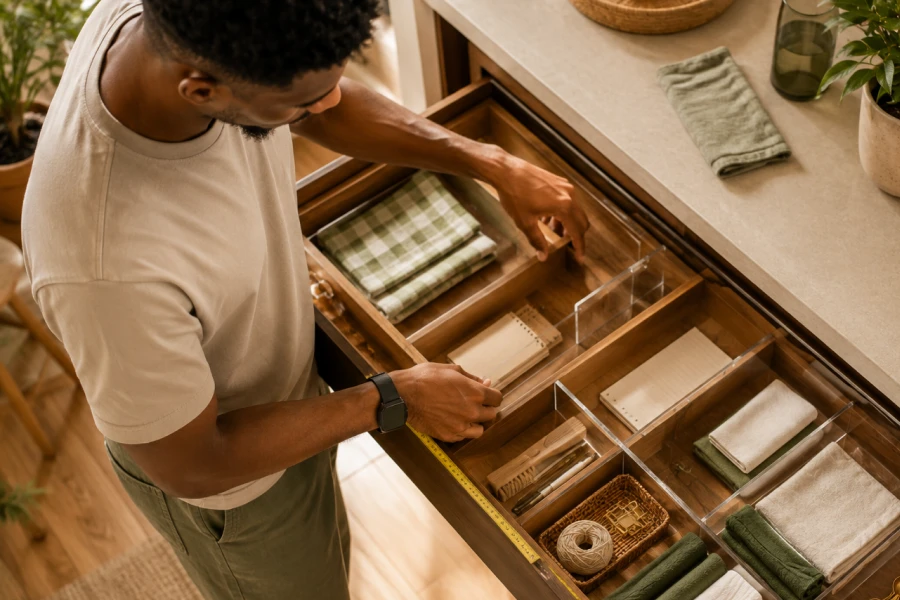
Every drawer has a hidden opportunity to work harder without feeling crowded. Drawer divider layout ideas help transform unused corners into useful, intentional storage. The right arrangement can make a narrow drawer hold far more than expected. More importantly, it makes the contents easier to understand at a glance. You stop opening a drawer with uncertainty and start using it as a reliable tool. This shift matters in kitchens, bathrooms, bedrooms, workspaces, and entryways. A thoughtful layout does not require expensive built-ins or a perfectly styled home. It only requires a clear sense of what belongs together. Once categories become visible, clutter loses much of its power.
Good layouts consider the shape of the drawer before the items inside it. Long, narrow drawers may need lengthwise sections for utensils, tools, or accessories. Wide drawers can handle grouped zones with different sizes and purposes. Deep drawers benefit from dividers that prevent stacked objects from turning into a pile. Begin with the largest items because they define the main structure. Then fill the smaller gaps with categories that would otherwise scatter. Avoid placing every item in equally sized sections. Real life rarely creates perfectly equal groups. Variation makes a layout feel tailored rather than generic. The space should respond to the contents instead of forcing the contents to fit.
Before moving anything, take a moment to measure the drawer’s interior. Notice the width, depth, height, and any areas reduced by hardware. These details can change which type of divider works best. A few minutes of planning can prevent an awkward purchase later. Make a quick sketch if the drawer has several categories. The drawing does not need to be polished or technical. It simply helps you visualize where larger pieces will sit. Leave a little room for items that move in and out regularly. Tight arrangements often fall apart because there is no margin for real use. A layout that allows breathing room tends to stay organized longer.
Containers are useful only after you understand what needs to be contained. Start by grouping objects into categories based on one routine or one task. This might include cooking, grooming, correspondence, hobbies, or daily essentials. Using custom drawer sections becomes easier when you know exactly what each zone should hold. Do not organize supplies by color alone unless color supports the way you use them. Similar-looking items may belong in completely different locations. Your layout should make decisions faster during a busy moment. That means keeping the most useful items together. Clear categories create a stronger foundation than beautiful containers ever can.
Kitchens need layouts that can handle frequent movement and quick cleanup. Store cooking tools near the prep area when possible. Keep serving tools close to where meals are plated or shared. Create separate zones for baking accessories, wraps, measuring tools, and small gadgets. Smart small drawer storage can turn narrow spaces into homes for clips, thermometers, and peelers. Think about the order of a task from start to finish. Place tools where your hands will naturally reach for them. This prevents drawers from becoming random holding areas. The most useful kitchen systems reflect the rhythm of cooking. They make preparation feel smoother before the first ingredient is even measured.
A drawer does not need to look perfect to feel calm. Still, visual balance helps your brain recognize where things belong. Keep similar-size items in sections that make sense together. Use one container style when possible, especially for tiny objects. Too many competing shapes can make a clean drawer feel busy. A simple desk drawer reset often works best with low-profile trays and visible categories. Avoid overfilling the front section just because it is easiest to reach. Distribute weight and volume across the drawer. This keeps the layout stable when opened quickly. A balanced visual arrangement encourages you to maintain it because the next step is obvious.
Life changes, and storage should have room to change with it. A drawer that once held school supplies may become a work-from-home station. A bathroom drawer may need more room for skincare during one season and travel products during another. Flexible dividers make these transitions much easier. Reconfigure sections instead of starting from zero. Keep a few empty or adaptable zones for new needs. That extra flexibility prevents a working system from becoming rigid. A layout should not make you feel guilty for changing your habits. It should help you respond to those changes with less friction. The most successful systems evolve quietly in the background.
Accessibility is one of the most overlooked parts of drawer organization. Frequently used items should sit where you can grab them without digging. Back sections work well for backups, occasional tools, and seasonal supplies. This simple choice saves time throughout the week. It also prevents everyday objects from landing on counters because returning them feels inconvenient. A helpful office drawer organization plan can separate active supplies from extras that rarely leave the drawer. The same principle works in every room. Keep what you need close. Store what you might need farther away. That one decision makes a layout feel instinctive.
Lasting order comes from making the right choice easier than the wrong one. Dividers make that possible because each item has an obvious return point. You do not need a complicated label system for a layout that already communicates its purpose. The drawer becomes easier to clean because there are fewer decisions to make. It also becomes easier to edit when clutter starts returning. Remove what no longer belongs and adjust the space around what remains. This creates a storage method that supports real routines rather than idealized ones. Your home can feel more intentional without becoming overly controlled. A well-planned drawer proves that even small spaces can create daily relief.




Leave a comment