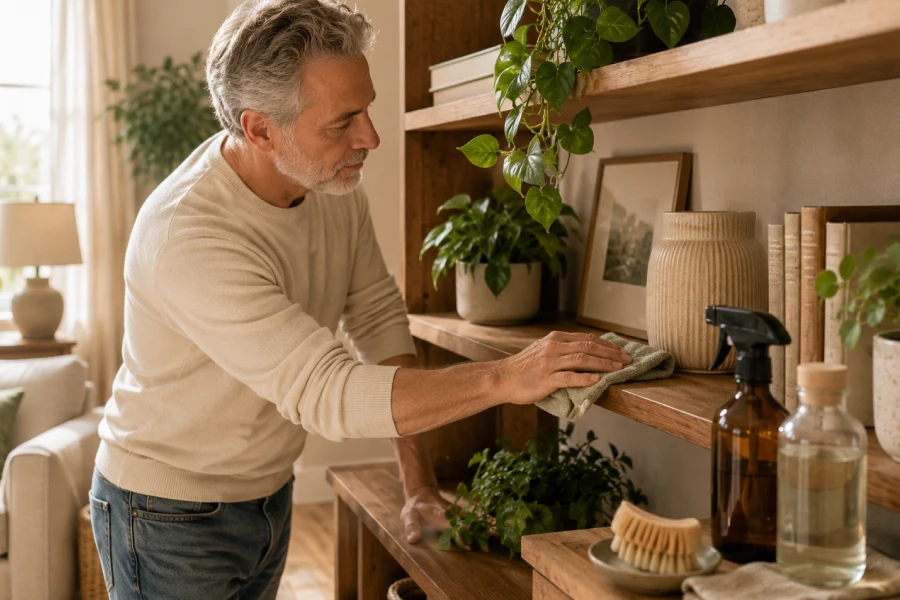
Dust has a way of returning just after a room finally feels clean. Natural ways to reduce dust focus less on constant wiping and more on preventing buildup before it spreads. Small changes to airflow, fabrics, entryways, and storage can make a visible difference. The goal is a fresher home that does not require endless cleaning products or complicated routines. When you understand where dust gathers, you can make better decisions about everyday habits. A calmer cleaning rhythm often begins with fewer surfaces collecting unnecessary clutter. It also begins with choosing materials that are easier to wash and maintain. A low-dust home does not need to be sterile. It simply needs systems that make freshness easier to sustain.
Most dust control begins long before you reach for a cloth. Dust enters through doors, windows, shoes, fabrics, and everyday movement. It also collects on cluttered surfaces because there are more places for particles to settle. Reducing these landing spots can make each cleaning session more effective. Start by noticing the rooms that seem dusty first. Those spaces often reveal the biggest sources of buildup. A bedroom may need more frequent linen care. An entryway may need better shoe storage. A living room may need fewer decorative objects on open shelves. Prevention feels more manageable once you focus on the source rather than the symptom.
A useful routine should fit your schedule instead of demanding a perfect one. Try grouping small dust-control tasks into normal weekly habits. Shake or wash textiles when doing laundry. Wipe entryway surfaces when returning shoes to their place. Open windows briefly when outdoor conditions are suitable. A consistent low-dust home routine works best when the steps feel connected to what you already do. Avoid saving every task for one exhausting cleaning day. Short maintenance moments often make the biggest difference. They reduce buildup before it turns into a noticeable problem. A home feels fresher when care happens in small, regular layers.
Soft furnishings can make a home feel welcoming, but they also hold dust over time. Curtains, cushions, blankets, rugs, and upholstered furniture all benefit from regular attention. Choose washable fabrics whenever possible, especially in high-use rooms. A thoughtful washable textile care routine keeps those materials feeling lighter between deeper cleans. Vacuum fabric surfaces using an appropriate attachment before dust becomes visibly heavy. Rotate and shake small rugs outside when weather allows. Keep decorative blankets folded away when they are not being used. These simple habits reduce the amount of dust circulating around the room. They also make a space feel more cared for without requiring a major overhaul.
Open surfaces invite dust, especially when they hold many small decorative items. That does not mean your home needs to feel bare or impersonal. It means choosing displays that are easy to clean and meaningful enough to keep. Group smaller objects on trays so they can move together during a quick wipe. Use closed storage for items that do not need to stay visible. A little dust-resistant decorating can make rooms look calmer while reducing cleaning time. Keep shelves edited rather than overcrowded. Select a few pieces that create warmth without creating dozens of dust-catching edges. The most comfortable rooms often leave space for the eye to rest.
Air movement can help reduce stale feelings inside a home, although it needs to be managed thoughtfully. Open windows when outside air quality and weather conditions make sense for your area. Use screens and keep nearby surfaces clean so airflow does not carry loose debris indoors. Check vents regularly and remove visible dust around them. Do not block circulation with heavy furniture or piles of stored items. A room that can breathe often feels easier to maintain. Freshness comes from many small decisions working together. It is not only about fragrance or surface shine. Good airflow supports the rest of your cleaning habits. That connection can make a room feel more comfortable throughout the day.
The entryway often carries more dirt and particles inside than any other area. Shoes, bags, coats, and pet supplies can spread dust quickly after a busy day. Create a place where outdoor items can pause before moving deeper into the home. A small mat, shoe tray, and regular entryway dirt control habit can reduce what reaches your floors. Wipe bags or wheels when they have been outdoors in dusty conditions. Keep frequently worn shoes together instead of scattering them through several rooms. This simple threshold routine supports the entire home. It also gives you a calmer arrival space at the end of the day. Prevention becomes easier when it starts at the door.
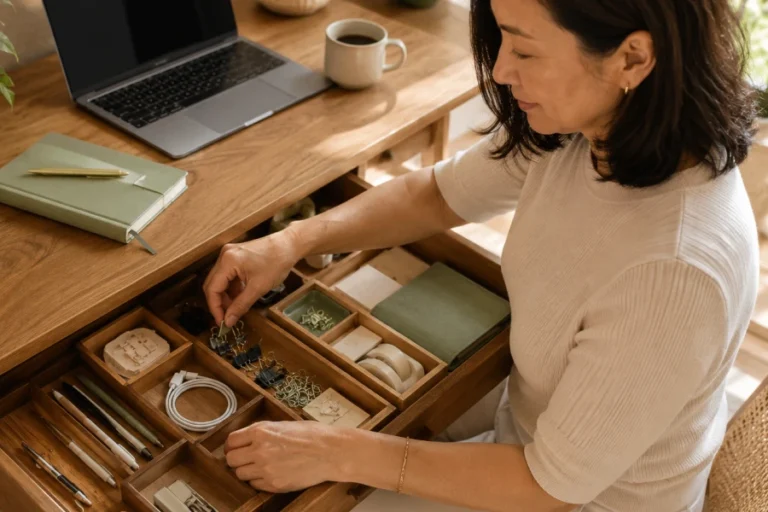
Dust loves forgotten areas because they rarely receive regular attention. Under-bed storage, crowded corners, stacks of old magazines, and overfilled cabinets can all collect more than expected. Edit what you keep in those spaces so cleaning becomes less complicated. Use containers with lids for seasonal items or infrequently used supplies. Keep floors as open as possible around larger furniture. This makes vacuuming and sweeping quicker when you need a refresh. It also prevents small piles from becoming permanent. Hidden clutter often creates visible dust eventually. A simpler storage plan gives particles fewer places to settle and fewer reasons to stay.
You do not need a strict household schedule to create a lower-dust home. Start with one room that feels difficult to keep fresh. Notice the fabrics, surfaces, entry points, and storage habits that affect it. Then choose one realistic change for the week ahead. The best results usually come from repetition, not intensity. As each small habit becomes normal, the room will require less recovery work. You may also notice that cleaning feels calmer because the task has clearer boundaries. A fresh home is not created through constant effort. It is created through systems that quietly reduce the work in front of you.



Leave a comment