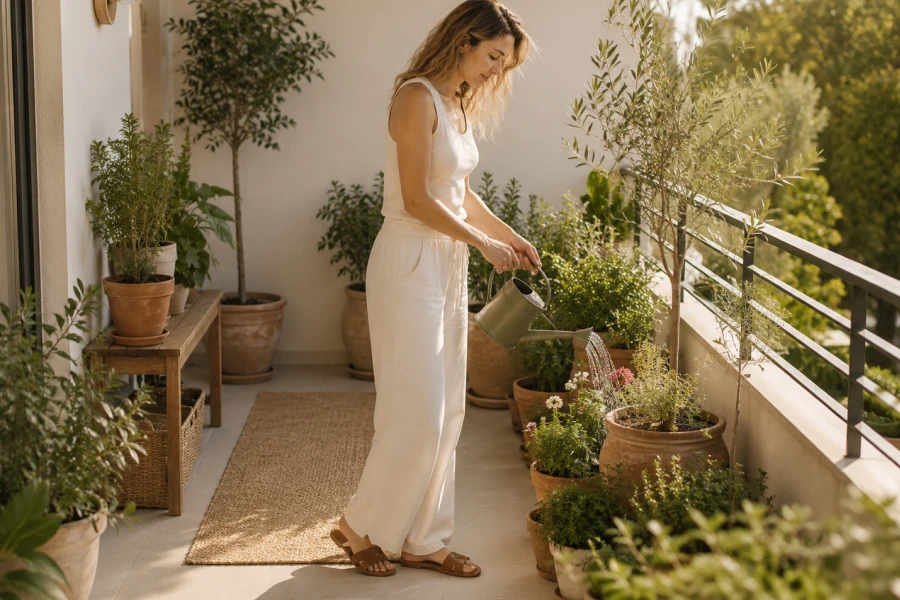
A balcony garden can bring color, scent, and calm to even the smallest home. Balcony garden safety tips make that peaceful space easier to enjoy with confidence. Containers, plants, furniture, and tools all need thoughtful placement when space is limited. The best gardens balance beauty with practical awareness of wind, weight, railings, and daily use. That balance does not make the garden less creative. It gives creativity a stronger foundation. A safe setup helps you relax around your plants instead of worrying about what might shift or fall. It also makes care easier because pathways stay clear and essentials remain accessible. A beautiful balcony should feel like a retreat, not a risk.
It is tempting to begin with flowers, herbs, and decorative containers. However, the strongest balcony gardens start with the structure of the space itself. Look at the floor, railings, drainage areas, doors, and walking paths. Notice where wind moves strongest during different parts of the day. Consider how much room remains when chairs, watering tools, and plants are all in place. These observations shape better decisions later. A thoughtful balcony garden safety approach begins before the first container arrives. Planning may feel less exciting than planting. Still, it gives your garden the stability needed to grow beautifully over time.
Containers become heavier than expected once soil and water are added. Large ceramic pots can be especially difficult to move and may place unnecessary weight in one area. Choose lightweight planters when possible, especially for larger plants. Spread containers across the balcony instead of grouping every heavy item together. Consider how water changes the load after rainfall or a thorough watering. Review your building rules or local requirements when you need clarity about capacity. A careful approach to balcony weight limits protects both your garden and the space beneath it. Good planning creates a more flexible layout. It also makes future adjustments much easier.
Planters should feel stable when brushed past or moved slightly during care. Look for broad bases and designs suited to the size of the plant. Avoid placing tall, top-heavy containers in exposed corners where wind is strongest. Use saucers that fit correctly so water does not create slippery patches. Consider safe container gardening methods that keep pots close to the floor when possible. Raised stands can be useful, but they should be sturdy and appropriate for the planter’s weight. Check every container after storms or seasonal changes. A secure pot protects the plant while making the balcony easier to use. Stability is one of the simplest forms of garden care.
Wind can affect a balcony more intensely than a ground-level garden. It may dry soil quickly, bend stems, move lightweight furniture, or topple narrow containers. Observe the direction and force of wind before choosing plant placement. Heavier pots often work better in exposed spots than delicate decorative pieces. Add supports where plants need help staying upright. A set of windproof planters can make a visible difference in higher or more open locations. Keep loose tools and lightweight accessories stored when not in use. A wind-aware layout protects your garden without making it look overly engineered. It simply helps the space feel prepared for real weather.
Railings are a visual feature, but they should never become an overloaded storage area. Avoid placing heavy items where they could shift, tip, or fall. Use approved hardware when attaching any planter or support to a railing. Check fasteners regularly, especially after strong weather. Keep the railing itself easy to inspect and free from clutter. A reliable balcony railing safety routine can include checking brackets, container stability, and nearby drainage. Do not depend on decorative cords or improvised attachments for heavy planters. A clean railing also keeps the view more open. Safety often creates a more polished visual result.
Every balcony garden needs a clear route from the door to the farthest point. This matters when carrying water, moving furniture, or stepping outside quickly. Keep tools, spare pots, and storage baskets away from the main walking path. Place larger containers along edges where they remain secure and do not narrow movement. Use trays or mats to catch drips around frequently watered plants. This can reduce slippery spots and make cleanup easier. A garden feels more inviting when you can move through it without careful sidestepping. Open space also lets plants receive better attention during routine care. Comfort and safety often begin with a clear floor.
A balcony garden should suit the people and animals who share the home. Consider children, visitors, and pets when choosing plant placement and accessories. Keep sharp tools, fertilizers, and fragile containers stored securely. Select plants with household safety in mind if pets may access the area. A thoughtful pet-safe plant choices plan can make the garden feel more welcoming for the whole household. Avoid creating tempting ledges or unstable climbing points. A safe garden invites more use because everyone can relax around it. That shared ease makes the space feel more valuable. Small details can support a much more peaceful outdoor routine.
Safe arrangements are often easier to care for because they leave room for regular attention. You can water without reaching awkwardly around heavy furniture. You can prune, sweep, and inspect plants without moving half the balcony. Keep a small storage solution for essential tools so they do not become loose hazards. Review your setup at the start of each season. Plants grow, weather shifts, and routines change over time. A flexible garden responds to those changes before they become problems. The result is not a static display. It is a living space that remains both beautiful and usable. Thoughtful safety supports every part of that experience.
When containers feel stable and paths stay open, the balcony becomes easier to enjoy. You can sit with a morning drink, tend herbs, or watch the evening light without feeling crowded. That sense of calm comes from choices that may not be visible at first glance. Secure planters, manageable weight, and clear movement create the background for beauty. They let flowers, foliage, and personal style take center stage. A safe garden also makes it easier to invite someone outside with you. The space feels ready rather than fragile. That readiness is part of what makes a small balcony feel generous. Good planning allows serenity to grow alongside the plants.

Leave a comment