
Learning how to keep house dust free naturally starts with understanding that dust control is a series of small choices. It is not about using stronger products or cleaning every surface every day. A fresher home comes from reducing what enters, what settles, and what stays hidden. That means paying attention to textiles, ventilation, footwear, storage, and daily clutter. When these areas work together, rooms can feel lighter with less effort. A natural approach also makes it easier to choose routines that fit your household. You can begin with one room and expand only when the habit feels manageable. The best plan is one you will actually repeat. Consistency turns ordinary care into a more comfortable home.
Outdoor particles often travel inside on shoes, bags, jackets, and pet supplies. A clear entryway routine can stop much of that movement before it reaches your main rooms. Use a durable mat outside and another inside when space allows. Give frequently worn shoes a dedicated tray or shelf. Keep bags off the floor if they have been carried through public spaces. A modest natural dust reduction habit begins by treating the entry as a useful transition zone. Wipe down handles, wheels, or items that get visibly dirty. These small actions protect the rest of your cleaning routine. The easier the entryway feels to use, the more likely everyone is to follow it.
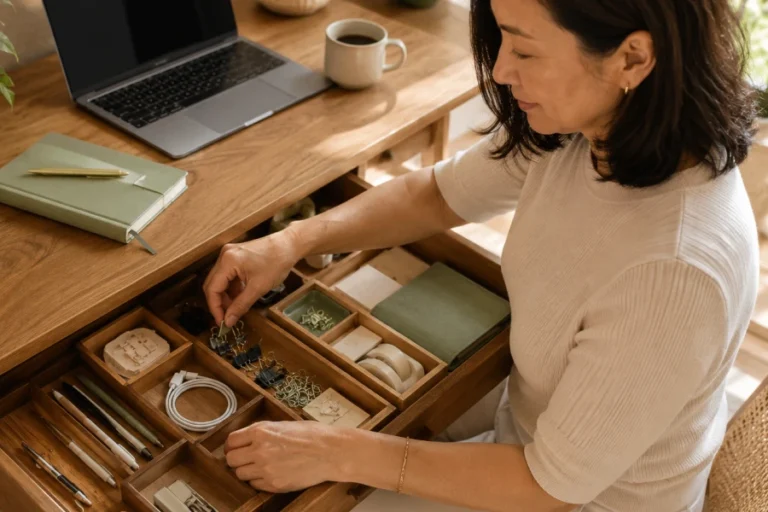
Storage can either simplify dust control or quietly make it harder. Open piles of paper, extra linens, seasonal decorations, and unused supplies all create surfaces where particles settle. Closed bins, drawers, and cabinets protect items that do not need everyday access. Choose containers that are easy to lift, wipe, and return. Keep labels simple if they help you identify contents quickly. Do not fill every shelf to its limit. A little open space makes both cleaning and finding things easier. This approach also helps you notice what is no longer useful. Better storage reduces dust because it reduces forgotten clutter.
Soft furnishings often hold particles long before they look dirty. Bedding, curtains, rugs, throws, and upholstered seating all benefit from regular refreshment. Include them in normal laundry and vacuuming routines rather than waiting for a seasonal deep clean. A simple fresh room routine can include shaking cushions, laundering covers, and vacuuming fabric surfaces. Choose washable textiles whenever you replace older pieces. Store extras that are not in use instead of leaving them exposed. These steps help a room feel softer without making it harder to maintain. Comfort and freshness can work together when materials are chosen thoughtfully.
Every object left on an open surface adds another edge for dust to settle on. That does not mean removing personality from your home. It means choosing what deserves daily visibility. Keep meaningful decor, favorite books, and useful tools within reach. Store everything else where it will not create extra work. Group small objects on trays so you can move them together when wiping. Use baskets for items that often wander across tables or counters. A room with clearer surfaces feels calmer before you clean it. It also takes less time to refresh because fewer pieces need individual attention. Intentional display makes visual comfort easier to maintain.
Stale air can make a freshly cleaned room feel tired quickly. Check vents and return areas for visible buildup. Keep furniture from blocking important air pathways. Open windows briefly when conditions are appropriate and outdoor air feels clean. Use screens to reduce insects and larger debris entering the home. Pay attention to rooms that consistently feel stuffy or dusty. They may need more regular clean air home practices instead of more surface products. Clean airflow supports the work you already do. It helps rooms feel refreshed rather than merely scented. That difference can make a home much more pleasant to live in.
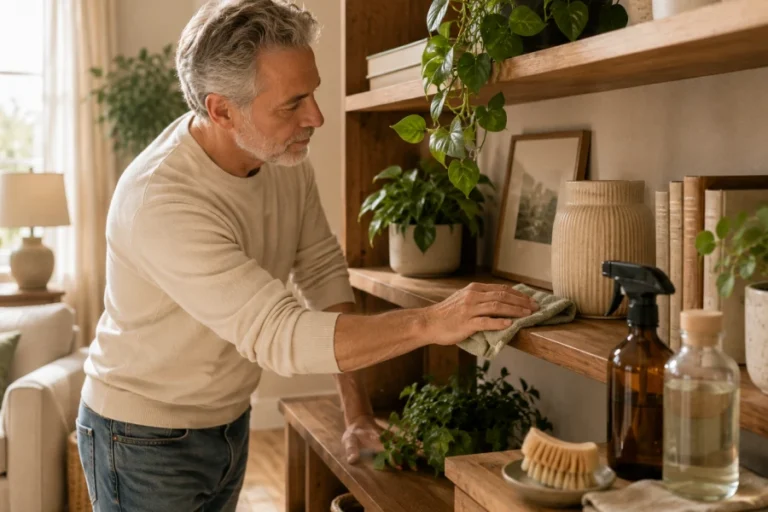
Cleaning order matters because dust tends to move downward. Start with higher surfaces, then work toward counters, furniture, and floors. Use a slightly damp cloth when appropriate so particles are collected instead of pushed into the air. Follow with vacuuming or sweeping after surfaces are clear. This sequence makes each task more effective. It also prevents you from cleaning the same area twice. Keep supplies nearby so a quick refresh does not require a full setup. A gentle, repeatable method usually works better than an aggressive approach you avoid. The goal is steady care that feels realistic. Good order makes ordinary cleaning more satisfying.
High-use spaces deserve routines that match their pace. Kitchens may need regular attention around cabinets, appliances, and floors. Living rooms benefit from cushion care, rug maintenance, and clear coffee tables. Bedrooms stay fresher when bedding and clothing storage receive regular attention. A practical dust control habits approach keeps these rooms from requiring constant deep cleaning. Focus on the areas that collect buildup fastest. That may be a television stand, a windowsill, or the area near the sofa. Small regular resets protect the comfort of the rooms you use most. A busy room can still feel restful when its systems are clear.
Natural dust control becomes easier when it feels connected to caring for your space. You are not trying to create a showroom that nobody can use. You are making rooms more comfortable for the people who live there. Keep the routine flexible enough to fit different seasons and schedules. Add a task when it feels useful. Remove a step when it no longer serves you. Over time, the home will reveal which habits make the largest difference. You will spend less time reacting to visible dust and more time enjoying the space itself. That is the real reward of a natural approach. It creates freshness that feels lived in, not forced.


Leave a comment