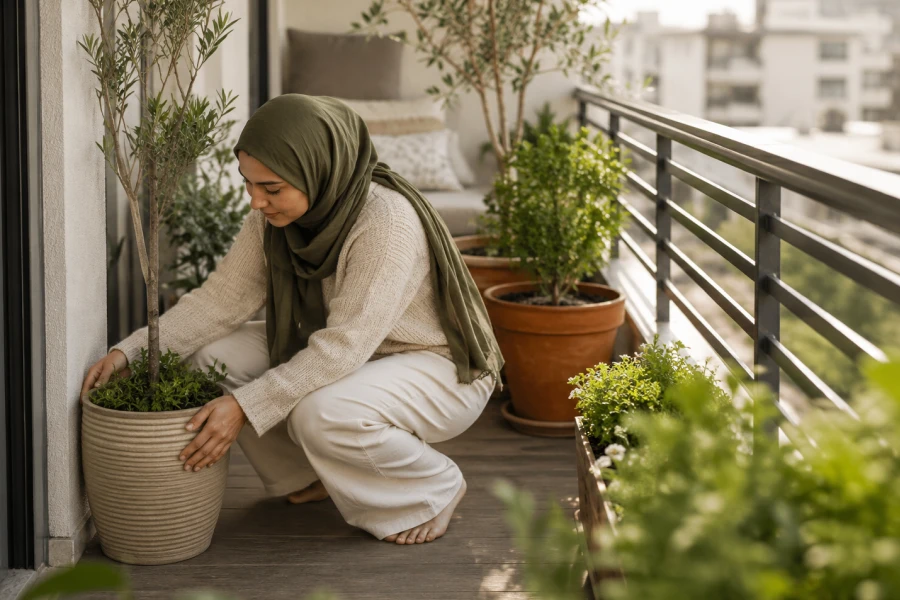
Plants can make an apartment balcony feel softer, more private, and more alive. Apartment balcony plant safety keeps that transformation grounded in everyday practicality. A good balcony garden considers not only what looks beautiful, but also what stays secure through changing weather and daily use. Planters, railings, furniture, water, and storage all shape the experience. When they work together, the balcony feels easier to care for and more relaxing to enjoy. Thoughtful safety does not limit your creativity. It makes your choices more durable. A stable garden lets you focus on color, scent, and growth instead of small worries. That freedom can make even a compact outdoor area feel deeply restorative.
Every apartment balcony has its own conditions, rules, and physical limits. Take time to understand your building requirements before adding large containers or attached planters. Notice whether the balcony is open, covered, shaded, or exposed to strong wind. Look at drainage areas and keep them clear. Check the condition of visible surfaces and railings before arranging heavy items nearby. These early observations help you plan a garden that feels appropriate for the setting. They also make it easier to avoid expensive changes later. A balcony garden should complement the space rather than fight against it. The more clearly you understand the structure, the better your planting decisions will become.
It can be tempting to choose oversized containers for immediate impact. However, large pots may be hard to move, heavy after watering, and awkward in narrow spaces. Start with manageable sizes that suit the balcony’s scale. Use lightweight materials when larger containers are necessary. Consider the mature size of each plant before choosing its home. A balanced balcony garden safety plan places the heaviest containers close to stable walls or corners. Spread weight instead of concentrating everything in one area. This protects the layout while making seasonal adjustments simpler. Practical pot sizes give you more flexibility as the garden grows.
Railing planters can look charming, but they require thoughtful installation and regular checks. Use only hardware designed for the exact railing style and container weight. Avoid adding heavy pots to railings that were never intended to carry them. Check brackets after wind, rain, and seasonal temperature changes. Keep the railing visible enough that you can inspect it easily. A careful secure plant displays approach places visual interest where it stays stable and manageable. Floor-level planters often offer more flexibility than railing attachments. Let the structure guide the design. Safety becomes more beautiful when it creates clean, confident lines.
Not every plant thrives in every balcony condition. Notice how much sun, wind, and shelter the area receives before choosing varieties. Select plants that suit the environment instead of forcing high-maintenance choices into an unsuitable spot. Group plants with similar watering needs together. This makes care more efficient and reduces the chance of overwatering or neglect. Consider how leaves, stems, and flowers will grow at maturity. A small balcony can feel crowded quickly when plants spread beyond their intended areas. Choose a collection that feels coherent rather than excessive. Plants should add softness without blocking movement or light. The right selection makes maintenance feel more natural.
Balconies often serve more than one person in a household. Pets may wander outside, guests may lean near railings, and children may be curious about containers. Keep tools, fertilizer, and fragile items stored safely. Choose sturdy placements that will not shift if someone brushes past them. A thoughtful pet-safe plant choices approach can make the garden more comfortable for animal companions. Avoid placing tempting objects near climbable areas. Keep pathways clear enough for another person to move through the space easily. A garden should invite connection, not require constant supervision. Simple precautions make shared outdoor time more relaxing.
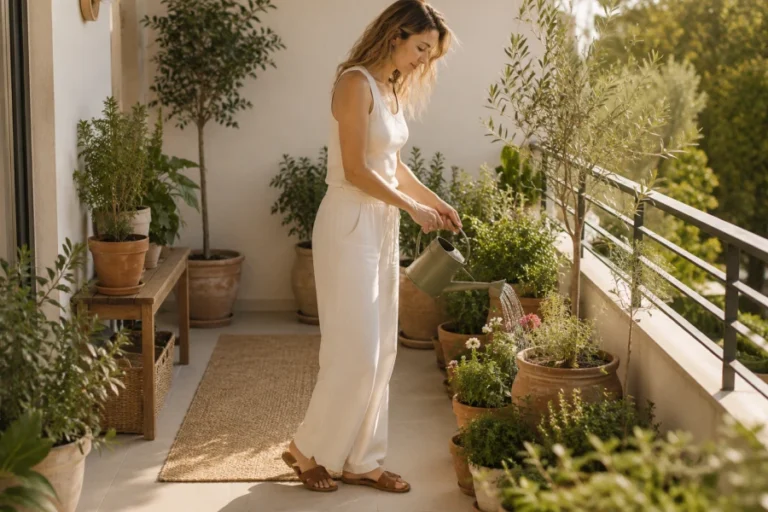
Water is part of the beauty of gardening, but unmanaged water can create problems quickly. Use trays, saucers, or self-contained planters when appropriate. Water slowly enough for soil to absorb moisture instead of overflowing. Check containers after storms to make sure drainage remains clear. Keep the balcony floor free from standing water whenever possible. Move pots slightly if moisture collects beneath them. A consistent watering method protects both plants and surfaces. It also makes the garden more pleasant to use after rain. Good drainage is not a decorative detail, but it affects every part of the experience. A dry, stable walking area helps the balcony feel ready at any time.
Plants grow, temperatures change, and the balance of a balcony can shift over time. Review the setup at the beginning of each season. Check whether containers have become too heavy, roots have expanded, or supports need adjustment. Move delicate plants to more sheltered positions when weather becomes severe. Store loose accessories during high-wind periods. Replace damaged pots before they become unstable. This seasonal attention keeps small issues from becoming serious ones. It also gives you an easy opportunity to refresh the garden’s look. Thoughtful change keeps the balcony feeling cared for rather than crowded. A garden that adapts will remain more enjoyable through the year.
Plants should make an apartment balcony more livable, not reduce it to a narrow passageway. Preserve a place to stand comfortably, sit with a drink, or step outside for fresh air. Keep the center of the space as open as possible. Use corners and edges for stable plant groupings. Choose furniture that works with the garden rather than competing against it. A relaxed layout creates a better relationship between greenery and everyday life. You can tend the plants without moving half the space. You can enjoy the view without looking past clutter. That balance makes a balcony feel like an extension of home. It gives both the garden and the people using it room to thrive.
When a balcony garden feels stable, beauty becomes easier to enjoy. You can notice the changes in leaves, blooms, and light without worrying about misplaced containers or crowded paths. The garden becomes a small daily ritual instead of a complicated project. Start with a few secure, well-chosen plants and let the space evolve gradually. Pay attention to what works in your actual conditions. Adjust anything that feels awkward before it becomes a problem. Over time, the balcony will reflect both your style and your care. That combination creates a space that feels genuinely personal. Safety is not separate from beauty. It is what helps beauty remain part of your everyday life.

Leave a comment