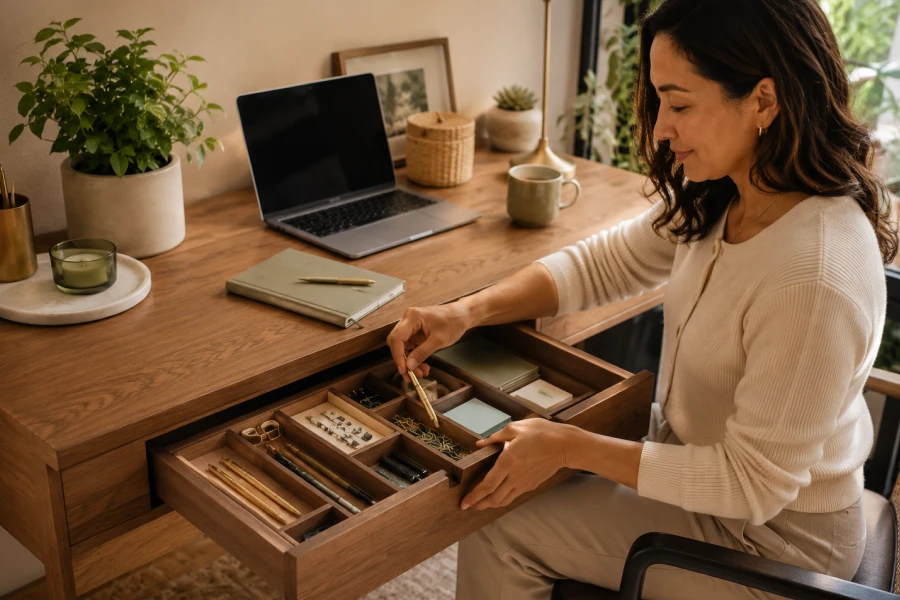
A busy desk can make even simple work feel heavier than it needs to be. Office drawer organization tips create a practical place for the supplies that often crowd your workspace. Pens, notes, chargers, clips, cables, and personal items all compete for attention when storage lacks structure. A well-planned drawer reduces those interruptions without making your setup feel overly strict. It also helps you see what you have before buying more. That saves money and prevents a drawer from becoming a collection point for expired supplies. You do not need a large office to build a more useful workspace. You only need categories that reflect the work you actually do. A clear drawer can make the whole desk feel more focused.
Workdays move quickly when deadlines, calls, and messages demand constant attention. Small searches for a pen or charging cable can interrupt your concentration more than expected. A drawer with defined zones removes those tiny obstacles. It gives active supplies a reliable home near your desk. You can also separate work essentials from personal items that tend to wander. This distinction creates a cleaner mental boundary between tasks. The drawer becomes less of a storage bin and more of a support system. When tools are easy to find, you can stay engaged with the work itself. That sense of readiness becomes especially valuable during demanding weeks.
Start by emptying one drawer completely and looking at what has collected there. Expired pens, broken clips, duplicate cables, and outdated notes often take up more space than useful supplies. Separate items into keep, relocate, recycle, and discard groups. Be realistic about what you use each month. A spare of something useful is reasonable. Ten backups of the same item usually create confusion. This process also reveals which supplies deserve front-row space. The goal is not to own less for its own sake. The goal is to make your drawer reflect current work, not old habits. A thoughtful edit gives every later decision more clarity.
Think about your day in clusters of activity rather than individual objects. Writing tools belong together because they serve the same kind of task. Charging accessories, adapters, and headphones create another useful group. Mail supplies and labels can form a separate zone. A simple home organization system becomes stronger when it reflects how you move through a workday. Keep your active categories near the front. Move references, backups, and rarely used pieces toward the back. This approach helps you reach for supplies without breaking concentration. It also makes cleanup faster after a packed afternoon.
Visibility matters because hidden categories often become neglected categories. Use shallow trays, low dividers, or open compartments for small supplies. Avoid stacking items where the bottom layer becomes impossible to reach. Clear sections help you notice when a category is running low. They also show when a drawer has started collecting unrelated clutter. A consistent layout can make even a modest workspace feel more professional. Keep favorite tools in the section you reach for most. Give each small category enough room to be useful but not enough room to attract extras. You should be able to open the drawer and understand its purpose immediately. That clarity makes organization easier to maintain.
Modern workspaces often need storage for more than paper and pens. Charging cables, flash drives, headphones, adapters, and backup batteries require their own thoughtful zones. Group electronic accessories by the devices they support. Keep loose cords coiled and contained so they do not tangle with writing tools. A designated utility drawer organization section can prevent small tech items from spreading across the desk. Store delicate accessories in soft pouches or padded compartments. This reduces damage while making travel preparation easier. A little structure helps digital work feel less scattered. Your drawer can support focus even when your tasks move between screens and paper.
Paper can overwhelm a drawer quickly because every sheet seems temporarily important. Create one small section for active notes, receipts, or forms that need attention. Give everything else a clear destination outside the drawer. Old papers rarely become more useful because they sit hidden under office supplies. Review that section weekly or whenever it begins to crowd your tools. The habit does not need to take long. A five-minute reset can prevent a much larger cleanup later. Keep only current materials within easy reach. This creates more room for the objects that support your actual work. A drawer should reduce distractions, not preserve them.
The best office systems are easy to restore after a productive but messy day. You should not need to sort every object from scratch. Instead, return supplies to the zones that already make sense. If something repeatedly lands outside the drawer, rethink its placement. It may need a more accessible section or a different home entirely. A regular organized drawer habits routine can keep the reset quick and almost automatic. This rhythm prevents visual clutter from becoming mental clutter. It also creates a calmer starting point for tomorrow. Small maintenance habits protect the larger structure.
Most workspaces include personal objects that make the day more comfortable. Lip balm, medication, snacks, tissues, glasses, or a small notebook may all deserve a contained home. Keeping them separate from work tools helps the drawer stay easier to navigate. It also prevents your essentials from disappearing beneath office supplies. Use a small section near the side or back of the drawer. This keeps personal items available without putting them in the center of every task. A balanced workspace should support both productivity and comfort. Thoughtful storage makes that balance easier to maintain. Your desk can feel professional while still feeling like yours.
A clear desk begins with the systems hidden beneath it. When your drawer is organized, you spend less energy reacting to small disruptions. The workspace feels more prepared before your first task begins. That preparation can affect the tone of the entire day. You find what you need faster, clear away distractions sooner, and close work with less mess left behind. The goal is not to create an office that looks untouched. It is to create one that supports real movement, ideas, and responsibility. A drawer can hold more than supplies. It can hold the structure that helps your work feel manageable.




Leave a comment