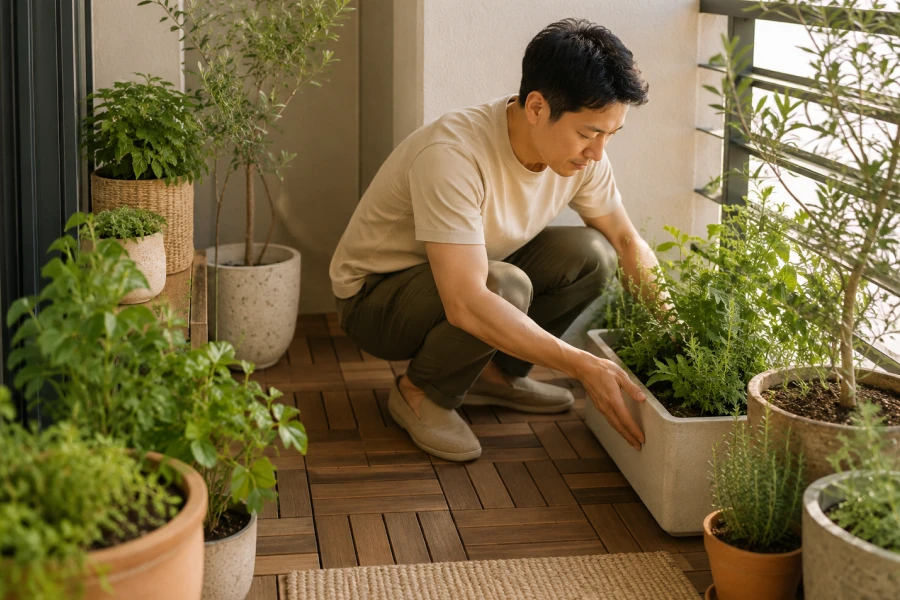
A small balcony can hold a surprising amount of life when each choice feels intentional. Small balcony garden safety helps keep that life beautiful, manageable, and comfortable to enjoy. Limited square footage makes placement especially important because every container affects movement and balance. The best small gardens feel layered without becoming crowded. They make room for growing plants while still preserving a place to stand, sit, and breathe. This balance begins with stable containers and a clear view of the space. It continues through thoughtful watering, storage, and seasonal care. A small balcony does not need to feel limited. With the right structure, it can feel like a private outdoor room.
Visible floor space gives a balcony both physical and visual breathing room. Keep a clear path from the door to the outer edge. Avoid storing soil bags, extra pots, or tools where feet naturally need to move. Place larger containers along walls or corners where they remain stable. Leave enough room to water plants without stepping around obstacles. This layout also makes sweeping and cleaning much easier. A balcony feels more comfortable when you can move through it naturally. Open floor space can make a small area appear larger than it is. It also reduces the risk of spills, slips, and awkward reaches. Good movement is part of good garden design.
Plants may look light and airy, but containers can become heavy quickly. Soil absorbs water, root systems grow, and tall plants can become top-heavy over time. Choose planters with wide bases and stable materials. Keep taller containers out of exposed positions where wind can catch them. Use groupings that create visual harmony without making one corner too heavy. A simple apartment balcony plants plan should consider mature size, not only how a plant looks on the day you buy it. Give each container enough room for future growth. Stable placement makes tending more relaxing. It also keeps the balcony ready for changing weather.
Railings can frame a garden beautifully, but they need to remain safe and easy to inspect. Do not overload them with heavy containers or improvised decorations. Use secure, approved supports whenever attaching something to the railing. Check those supports regularly, especially after storms or temperature changes. Keep plant growth trimmed if it begins to interfere with shared spaces. A clean, visible railing also makes the balcony feel more open. Place most weight close to the floor whenever possible. This gives you more control over the garden’s balance. Careful choices around the railing protect the view as well as the garden. Thoughtful restraint can look more elegant than excess.
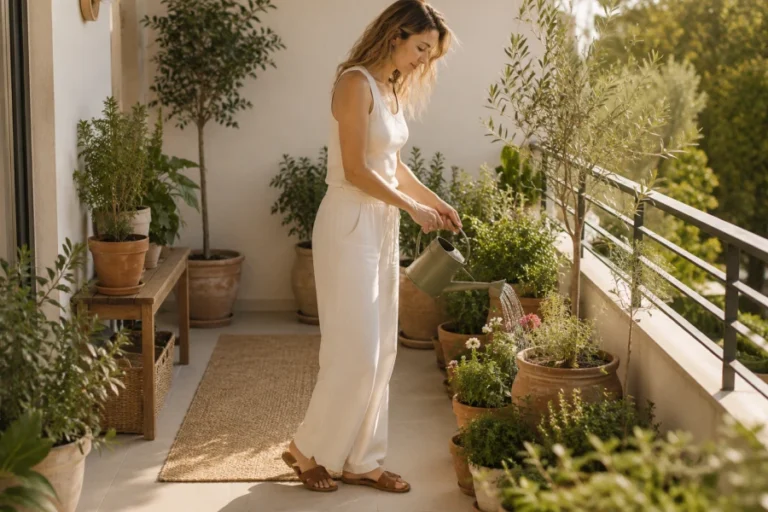
Watering should feel easy enough that you can do it carefully. Keep plants within reach instead of forcing yourself to stretch across furniture or crowded containers. Use saucers, trays, or drainage-friendly setups beneath pots when appropriate. Check for overflow after heavy watering or rainfall. Keep drains clear of loose soil and fallen leaves. A regular outdoor plant care routine can include a quick look at water flow, soil moisture, and container stability. This helps prevent slippery patches and stressed plants. Good watering systems support the health of the garden and the comfort of the balcony. Simple access makes thoughtful care much more likely.
Vertical elements can make a small garden feel richer, but they should never feel precarious. Choose sturdy trellises, wall supports, or freestanding structures designed for outdoor use. Keep climbing plants controlled so they do not pull supports out of balance. Avoid creating tall displays in locations with strong wind exposure. Consider how the structure will look and function as plants mature. A vertical accent should enhance the balcony rather than dominate it. Keep lower containers stable enough to support any nearby growth. This approach gives you visual height while preserving a calm overall shape. The best small gardens use vertical space with restraint. That restraint helps the entire design feel more secure.
Weather can change a small outdoor space quickly. Wind may move lightweight accessories, while rain can increase the weight of containers. Review the balcony after storms to see what shifted or collected water. Store loose tools and delicate decor when harsh weather is expected. Move vulnerable plants closer to sheltered walls when possible. A careful peaceful balcony retreat stays enjoyable because it is ready for real outdoor conditions. Weather awareness does not need to create anxiety. It simply gives you a reason to check the garden regularly. Those small inspections often lead to better plant care too. Preparation keeps beauty from becoming fragile.
Small balconies benefit from a shorter list of essential gardening tools. Keep a hand trowel, pruning shears, watering can, gloves, and a small cleaning brush nearby. Store them in one compact, covered container. Avoid collecting multiple versions of tools you rarely use. This protects the balcony from feeling like a storage area. It also means you can begin care without searching through clutter. Choose supplies that serve more than one purpose when possible. A small set of reliable tools supports a more peaceful routine. Less equipment can create more freedom in a limited space. The garden should be the focus, not the supplies around it.
A well-planned balcony gives you permission to slow down. When the path stays open and containers feel stable, the space becomes more inviting. You can sit outside without feeling surrounded by tasks waiting to be done. Plants become part of the atmosphere instead of a source of stress. That change is especially meaningful in compact homes where outdoor space feels precious. Let the garden remain flexible as your preferences change. Move one pot, add one herb, or simplify one corner when it no longer serves you. A small garden can grow with your life while staying grounded in practical care. Peace often begins with the confidence that your space is supporting you.

Leave a comment